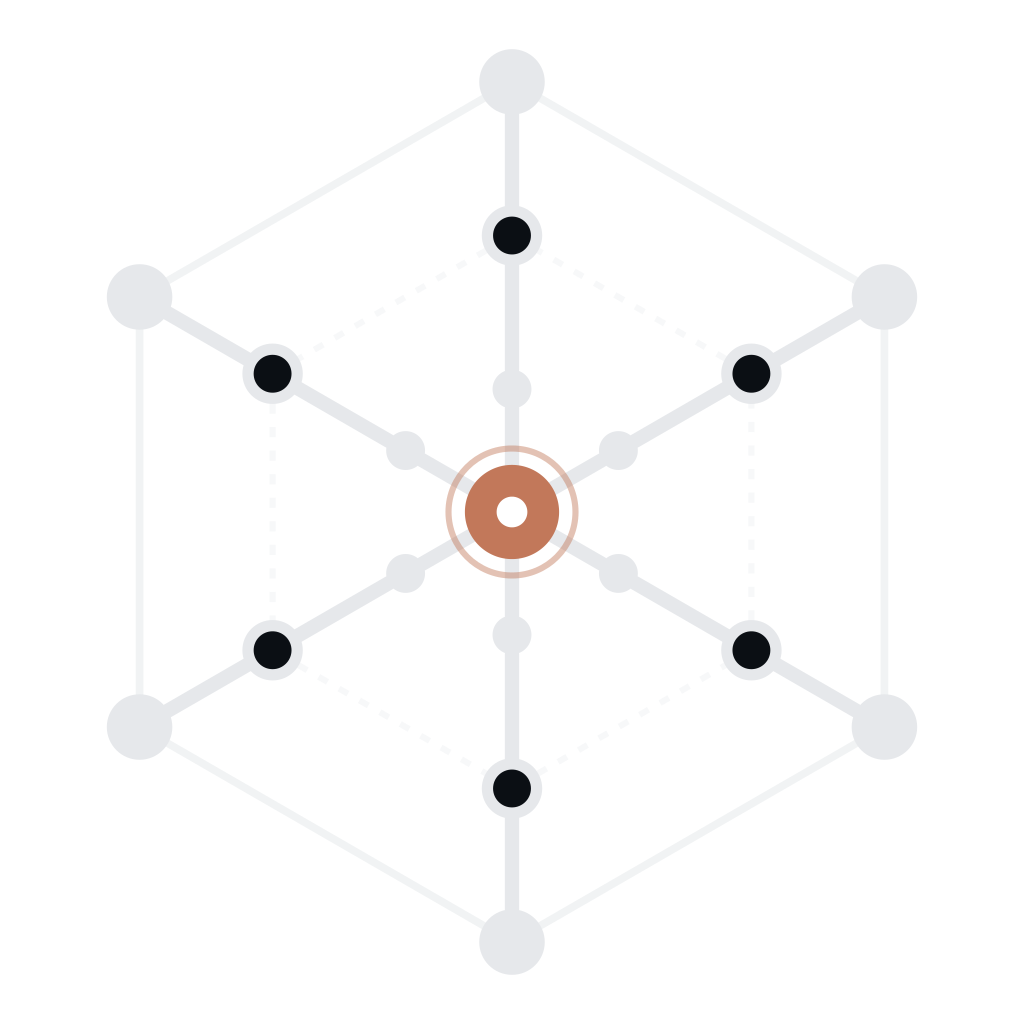

Enterprise AI is missing a memory layer
Most organisations have models and they have repositories, but they lack a governed layer between them. The result is repeated context, inconsistent answers and tools that cannot reliably remember what the organisation has already decided.
A governed memory layer connects knowledge once, preserves its ownership and makes it available to conversations, agents and workflows without flattening the original permission boundary.
Memory has three practical boundaries
Personal memory supports private files, conversations and generated work. Teamspaces give a project or department a shared graph. Organisation memory publishes approved knowledge such as handbooks and policies for everyone.
- Personal: the individual is the audience and owner.
- Teamspace: invited members, agents and workflows share the context.
- Organisation: administrators curate trusted company-wide knowledge.
Scope is resolved before retrieval
Identity and active space must be resolved before a query reaches search or a model. This prevents a fluent model from seeing information it was never authorised to process.
The retrieved passages remain attached to the answer as citations. When the same request is made from a different scope, both the available memory and the resulting evidence change.
◇Permissions should constrain retrieval—not merely hide an answer after generation.
Agents inherit the same boundary
An agent combines instructions, tone, approved knowledge, repeatable skills and controlled tools. A Presentation Team, for example, can research, analyse and create PowerPoint, Word or Excel outputs while remaining inside its active space.
Tools such as web search or code execution expand capability, not authority. Important publishing, delivery or system actions pause at a human approval gate.
- Persona defines the job.
- Knowledge defines what the agent may know.
- Skills define repeatable work.
- Tools define controlled external capability.
Route intelligently and preserve proof
Approved models can be profiled for reasoning, instruction following, speed and cost. The router chooses the best permitted model for each task and learns from live usage, while administrators retain the right to pin or exclude models.
Every answer and action should retain the identity, scope, sources, model, cost, tool calls and approval outcome. That evidence turns AI from an opaque utility into an accountable operating layer.